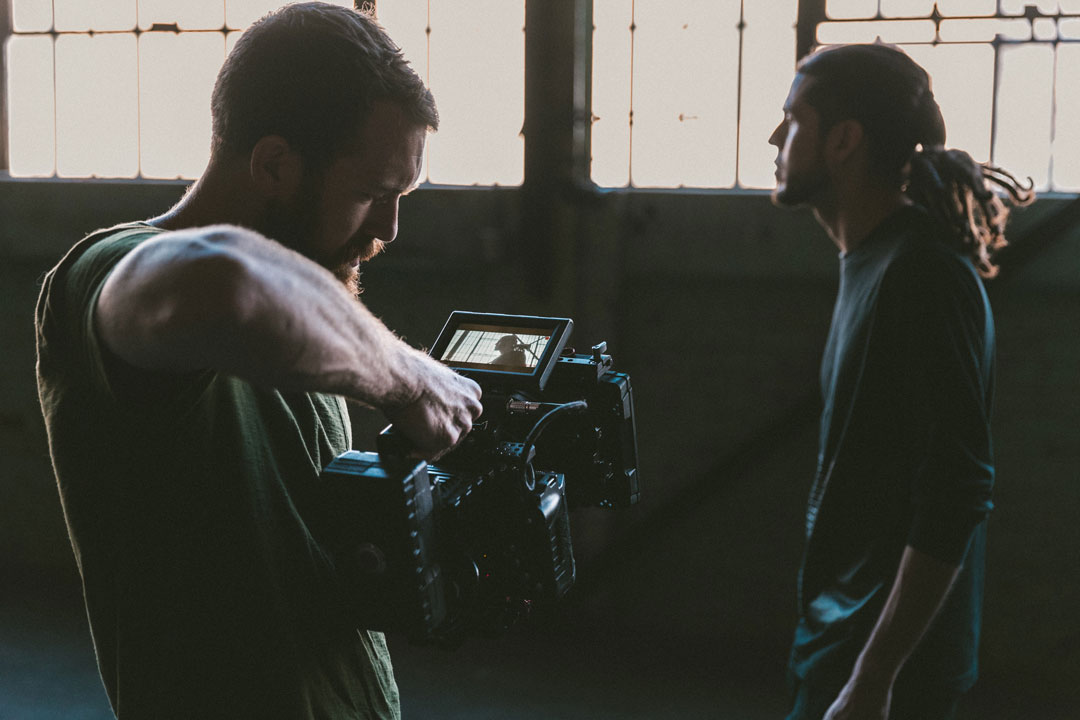
At some point, anyone who has ever pointed a camera at something and said “action” has probably asked the question: Am I a filmmaker?
It sounds simple until you try to answer it. Then it turns into a small identity crisis somewhere between your first edited sequence and your fifth unpaid project.
If you directed a short film, you might be a filmmaker.
If you produced a documentary, probably a filmmaker.
If you shot a commercial, maybe a filmmaker.
If you filmed your friend’s band and uploaded it online, possibly a filmmaker.
If you run a YouTube channel with two million subscribers, you somehow become harder to classify.
The word “filmmaker” feels official. Cultural. Slightly elevated. It suggests festivals, premieres, and the faint smell of coffee in a post-production suite. It implies intention and authorship. It sounds like something that goes on grant applications.
So, what makes a filmmaker?
Well, the reality of modern production makes the label unstable.
A director who spends ten years making one feature film is clearly a filmmaker.
A production manager who has worked on fifty films usually refuses the label.
A cinematographer might accept it in a festival bio and reject it on a call sheet.
An editor may quietly be the most cinematic thinker in the room and still introduce themselves as “just an editor.”
Meanwhile, a YouTuber scripts, shoots, directs, edits, grades, publishes, markets, and distributes their own work and still hesitates before saying the word. The label is less about what you do than how you position yourself.
Historically, “filmmaker” meant a small group of creative heads – directors, producers, and sometimes writers. Everyone else had a job title. You were a gaffer or a line producer or a costume designer. No ambiguity.
Digital production dissolved that structure. Cameras became accessible. Editing moved to laptops. Distribution became immediate. Suddenly the person holding the camera might also be the producer, the editor, the marketing department, and the audience analytics team. If the classic filmmaker was a specialist, the modern filmmaker looks suspiciously like a one-person studio.
This is where the identity question becomes unavoidable.
Content creators make videos.
YouTubers make series.
Influencers produce branded storytelling.
TikTok creators experiment with visual language at industrial scale.
Many of them operate with more autonomy than traditional directors ever had. Some reach larger audiences than theatrical releases. Some develop stronger visual styles than independent cinema. Yet the term “filmmaker” still carries a quiet boundary line. It often signals art rather than output, intention rather than volume, authorship rather than optimisation. Which leads to the awkward moment where someone who produces cinematic documentaries for streaming platforms says, “I make content,” while someone who records daily vlogs occasionally says, “I’m a filmmaker.”
The difference is rarely technical.
It is mostly cultural.
In an era obsessed with identity categories, the question “Am I a filmmaker?” starts to sound like one of those forms where you have to select how you identify. Director. Producer. Creator. Artist. Videographer. Storyteller. Entrepreneur. Hybrid.
The honest answer is that the category itself was designed for a different industry.
“Filmmaker” is an identity label, not a job description. It works well in biographies, festival catalogues, and press releases. It works poorly when trying to explain what someone actually does on a Tuesday afternoon. Most professionals move fluidly between roles. A producer directs a second unit. A director edits a trailer. A cinematographer produces a short. A YouTuber hires a crew. A commercial director shoots a documentary between campaigns.
The label stays the same while the work shifts constantly.
Which may explain why the question persists.
Not because people are unsure what they do, but because they are trying to locate themselves inside an industry that keeps changing shape.
The simplest possible definition of a filmmaker
In practice, the simplest definition might be the most accurate:
"A filmmaker is someone who makes films."
Which sounds obvious until you realise that nobody agrees on what a film is anymore.
Somewhere inside all this uncertainty sits the practical reality: regardless of what you call yourself, the work still needs to get done.
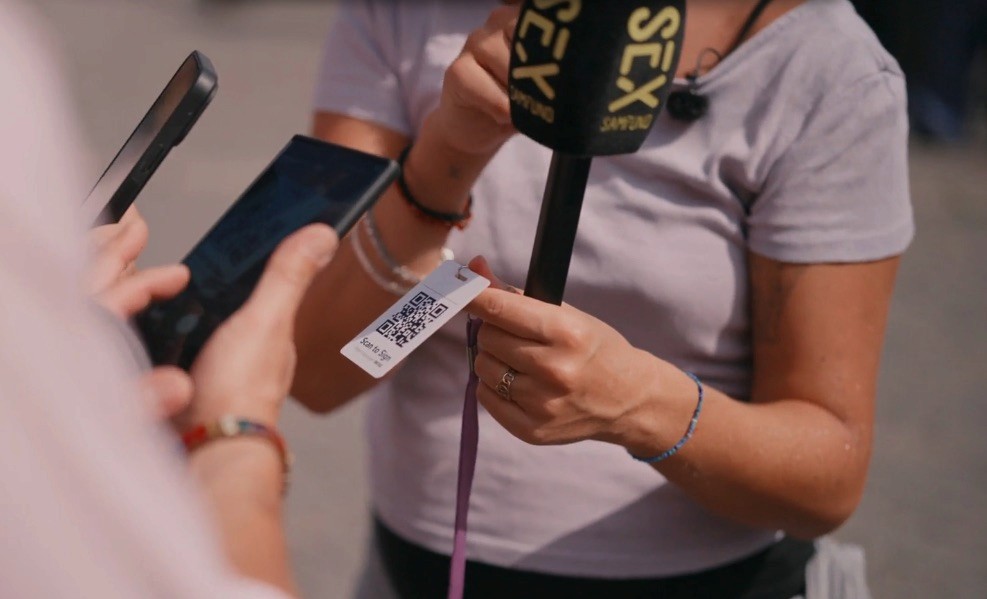
Films, videos, series, branded stories, documentaries, YouTube channels, and experimental projects all share the same invisible infrastructure. Agreements need to be signed. Releases need to be collected. Teams need to stay aligned. Versions need to be tracked. Rights need to be clear long after the shoot wraps.
The label may be unstable, but the paperwork is not.
This is the space Connie is built for.
Not for a narrow definition of “filmmaker,” and not for a specific tier of the industry, but for anyone doing the work of turning ideas into finished productions. Directors and producers use it. Production managers rely on it. Small crews organize projects with it. Independent creators run entire productions through it. Agencies use it for campaign shoots. Podcasters send guest agreements. YouTubers collect releases. Small studios manage recurring productions.
Some users identify as filmmakers. Some do not.
The distinction does not matter.
Connie is designed around the reality that modern production is fluid. Roles overlap. Teams scale up and down. A single person may run a project this month and join a crew the next. The same person might move between feature films, branded content, and online series without changing tools.
The goal is not to define who counts as a filmmaker.
The goal is to make it easier for anyone making moving images to operate like a professional.
You want to simplify your paperwork as a filmmaker? Start a free trial now, find more information about Connie here, or book a demo session to learn more.
Related reading
Tidligere indlæg: